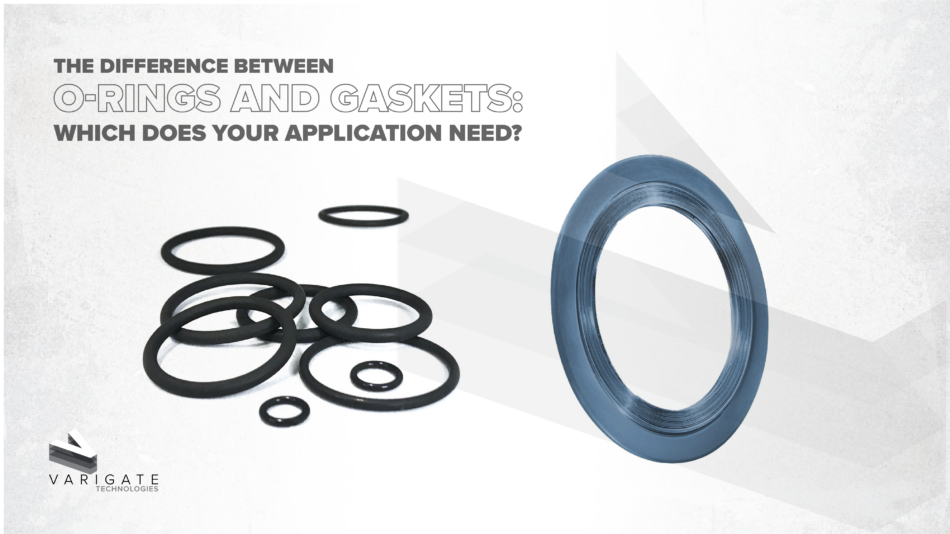
O-rings and gaskets may appear similar, but each serves a distinct function within sealing systems. Selecting the wrong type of seal can lead to leaks, pressure loss, or equipment failure. Whether used in hydraulic assemblies or food-grade environments, it is essential to understand how each seal functions and where it performs at an optimal level.
Varigate Technologies provides sealing solutions that are precise, reliable, and matched to the specific demands of each application across a wide range of industries.
Understanding O-Rings: Function & Uses
O-rings are elastomer seals that form barriers When compressed between two surfaces that keeps fluids or gases contained. They are commonly used in hydraulic fittings, pneumatic systems, pumps, valves, and flanges, providing effective sealing in both static and dynamic assemblies. Industries such as oil and gas, mining, agriculture, and food processing rely on O-rings for their durability, ease of installation, and cost-effectiveness. Material selection depends on the operating environment. Nitrile (NBR) performs well with oils, FKM resists high temperatures and aggressive chemicals, and EPDM and silicone are suited for steam and food-grade applications. Selecting the appropriate O-ring enhances system integrity and reduces maintenance requirements.
Gasket Overview: Roles & Applications
Gaskets are flat seals that sit between two fixed parts to prevent leaks, usually between flanges or connected surfaces. They play a critical role in systems handling liquids, gases, or contaminants by preventing leaks and maintaining system integrity. Common applications include piping systems, engines, compressors, and storage tanks. They are commonly used across industries such as oil and gas, water treatment, chemical processing, and food production. Gaskets are manufactured from a variety of materials, including rubber, cork, PTFE, and metal, selected based on operating pressure, temperature, and chemical exposure. Choosing the correct gasket supports long-term equipment performance and reduces the risk of system failure or costly downtime.
Factors That Influence Seal Performance
Selecting the right seal involves several key considerations, including pressure, temperature, chemical exposure, system movement, and surface type. O-rings are typically used in compact, high-pressure, or dynamic applications and are common in industries such as oil and gas, mining, and manufacturing. Gaskets are better suited for sealing large, flat surfaces between rigid components and are widely used in food and beverage manufacturing, chemical processing, and water treatment industries. It is important to find compatible materials because factors like vibration, abrasion, and thermal cycling can affect long-term sealing performance. Evaluating these application-specific requirements helps ensure reliable operation, minimize maintenance, and support system efficiency.
Performance You Can Rely On
The right sealing solution depends on the specific needs of the application. O-rings and gaskets each offer distinct advantages, and selecting the proper type and material is essential for maintaining system performance. From high-pressure hydraulic systems to sanitary food processing lines, using the correct seal extends equipment life and helps prevent costly downtime. With proven expertise and in-depth industry knowledge, Varigate Technologies helps clients find sealing solutions that meet operational demands and deliver long-term results.
Contact us or
request a quote to find the right seal for your equipment.